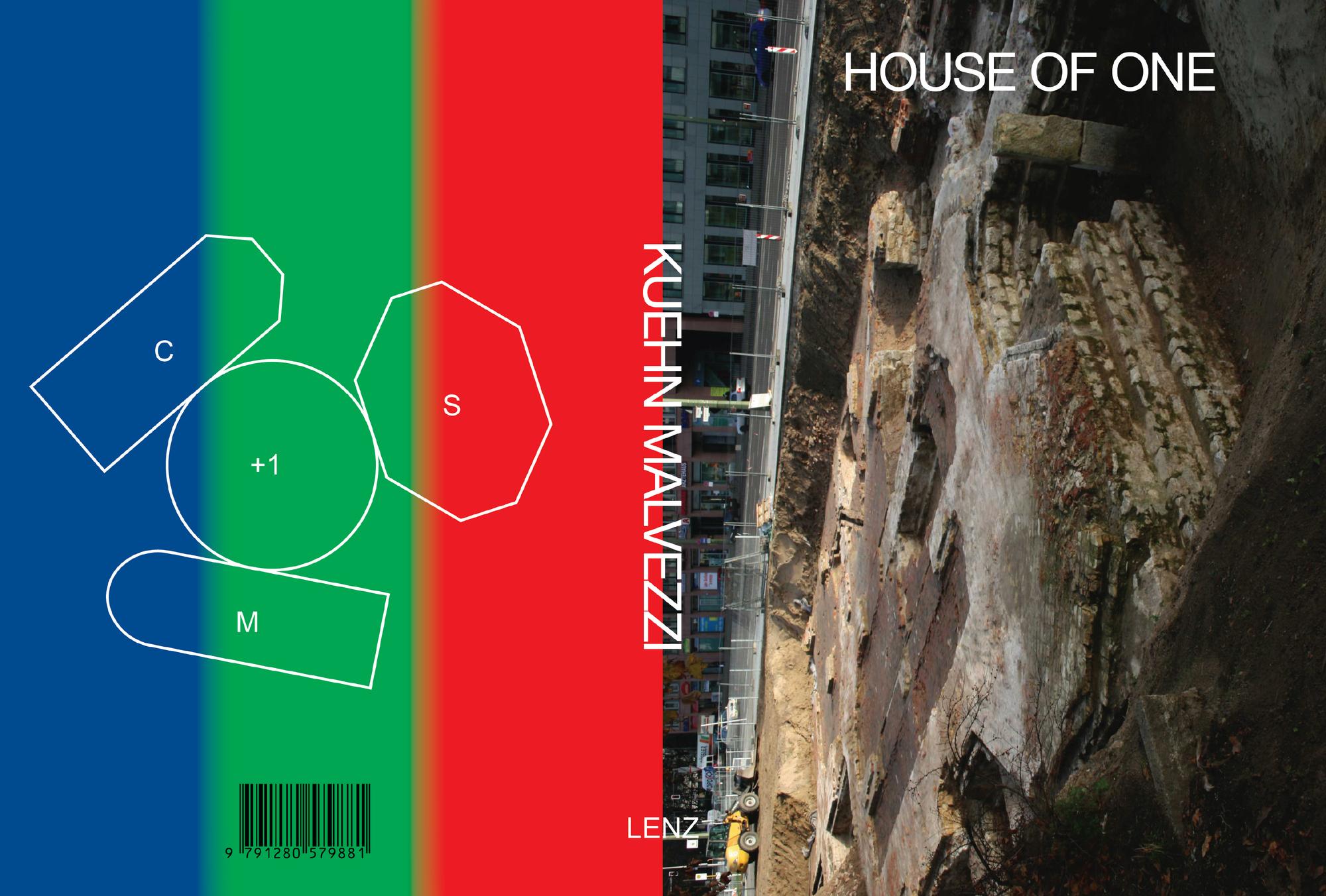
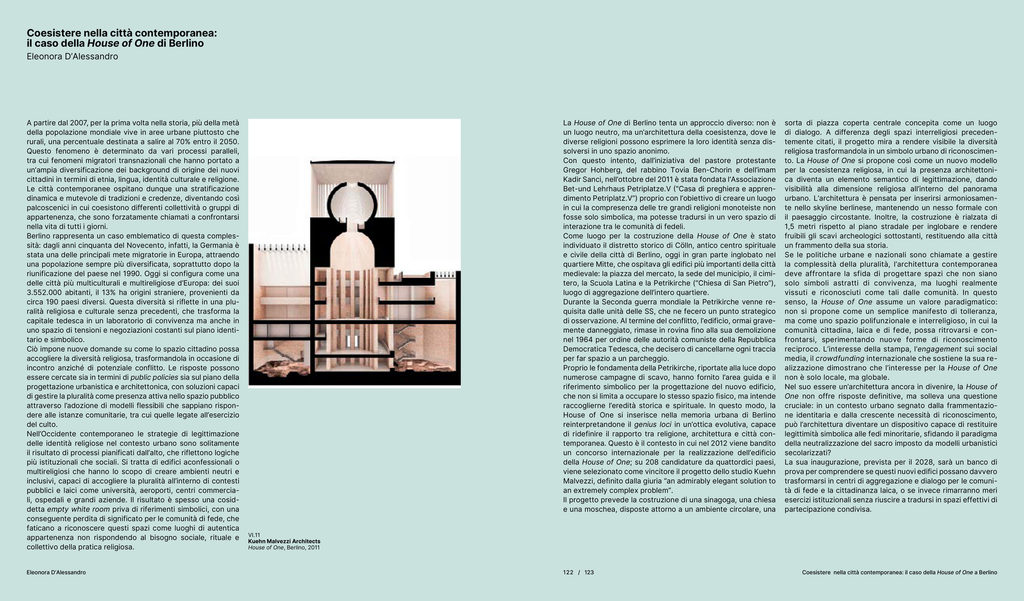
The volume “House of One” by KUEHN MALVEZZI, published by LENZ Press, is a book rich in ideas and in-depth analysis, entirely dedicated to the multi-religious building currently being constructed in Berlin by the architectural firm.
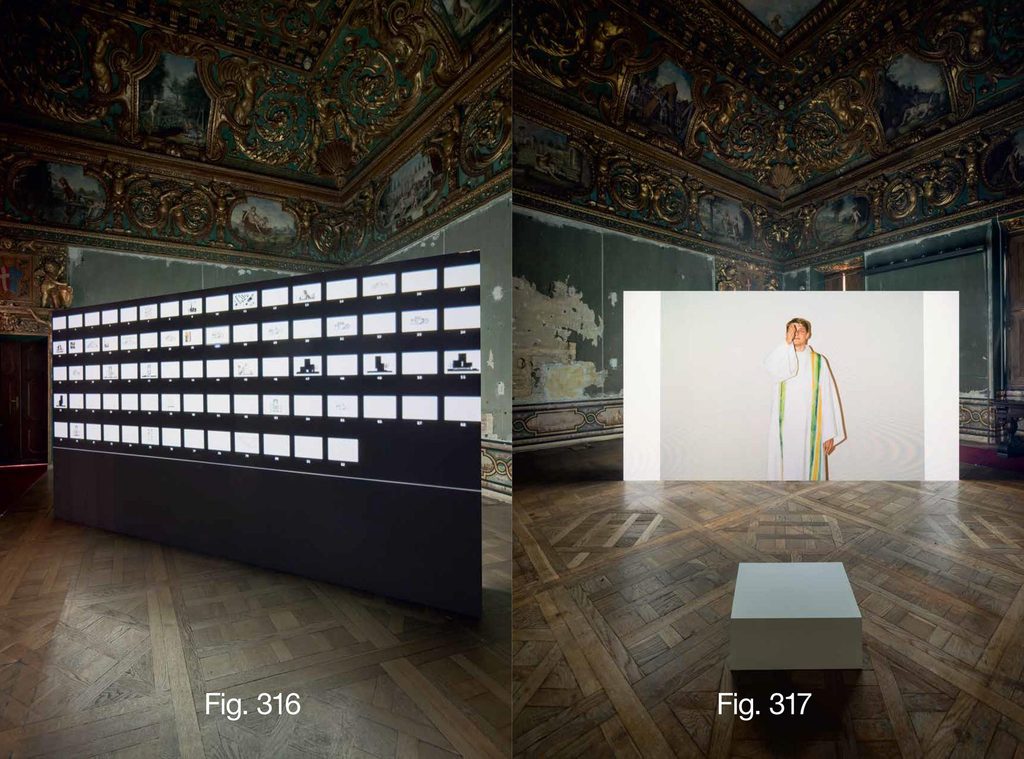
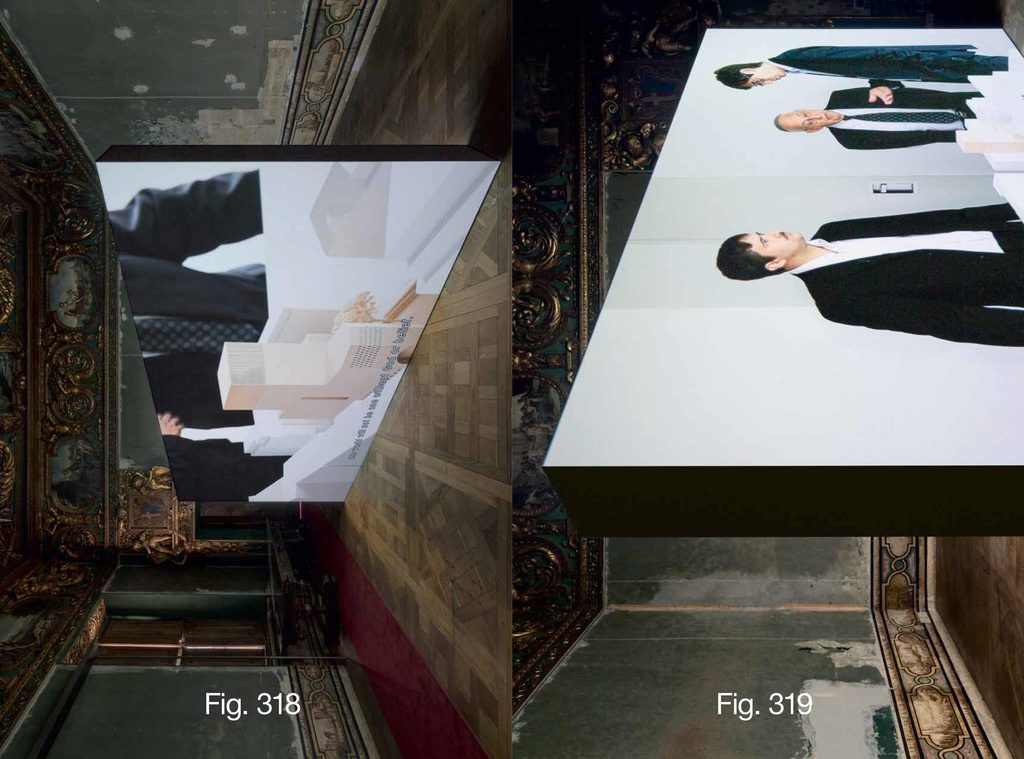
A section of the book highlights the dissemination of the project through exhibitions, including RITUALS/MATERIALS, curated by ShaRP Lab members. Images from this section can be found on pages 316–319.
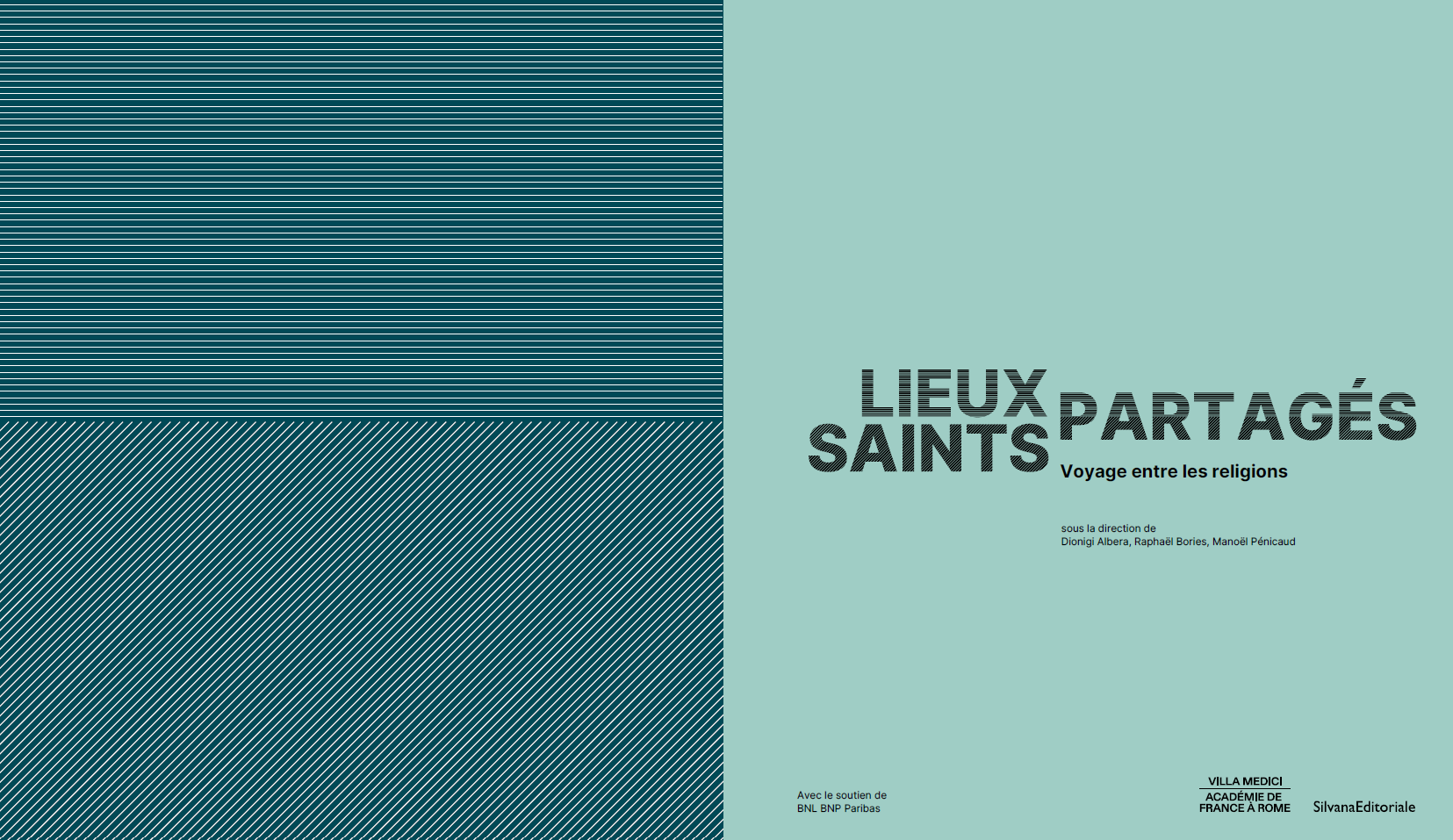
Happy to share a publication featuring a contribution from a ShaRP Lab member!The catalogue is available in the bookshop of the exhibition Lieux Saints Partagés. Voyage entre les religions, curated by Dionigi Albera, Raphaël Bories, and Manoël Pénicaud, taking place at Villa Medici (09.10.2025–19.01.2026).
The catalogue includes a piece by Eleonora D’Alessandro, who guides readers through the House of One project in Berlin — a multifaith building currently under construction in the German capital. It is available both in French and Italian.
In January 2022, October 2022, December 2022, and May 2023, Mariachiara Giorda travelled to New York City and together with Ioan Cozma conducted research in Manhattan, particularly focusing on two case studies: the St. Nicholas Greek Orthodox Church, located at the Ground Zero, and the St. Dumitru Romanian Orthodox Church, located in the Upper West Side.
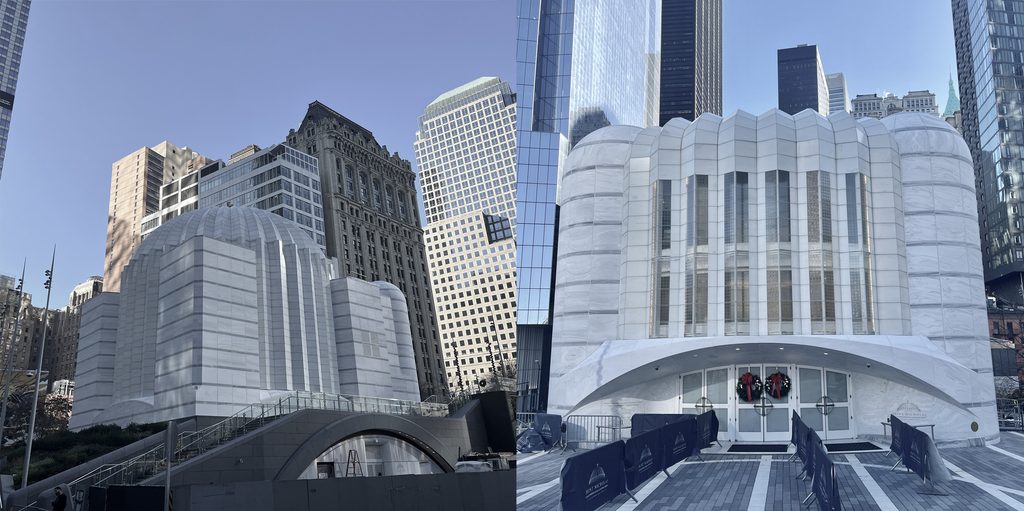
St. Nicholas Greek Orthodox Church. Photo credit: Catalin Cozma.
The first case study examined the history and dynamics generated by the rebuilding process of the St. Nicholas Greek Orthodox Church at Ground Zero in New York City, the only church destroyed during the collapse of the Twin Towers on September 11, 2001. The events of September 11, 2001 are considered one of the most important in contemporary global history and the collective American memory. In New York City especially, these events have influenced public life and the way of living and organizing public spaces. The Twin Towers’ space is considered a sacred and controversial space and it has been, in the last twenty years, at the center of public and media debates, an object of urban policy choices, a place of memories, and a tourist destination. In this space, some places fill the absence caused by so many deaths, and they try to fill the collective trauma of Americans. Different places, not always welcomed, disputed, hyper-secular places, like the Oculus which is host to 12 subway lines and over a dozen shops, the World Trade Center PATH station and implicitly religious places, like the memorial pools of the victims and explicitly religious places, like the shrine, are what were addressed in this fieldwork research
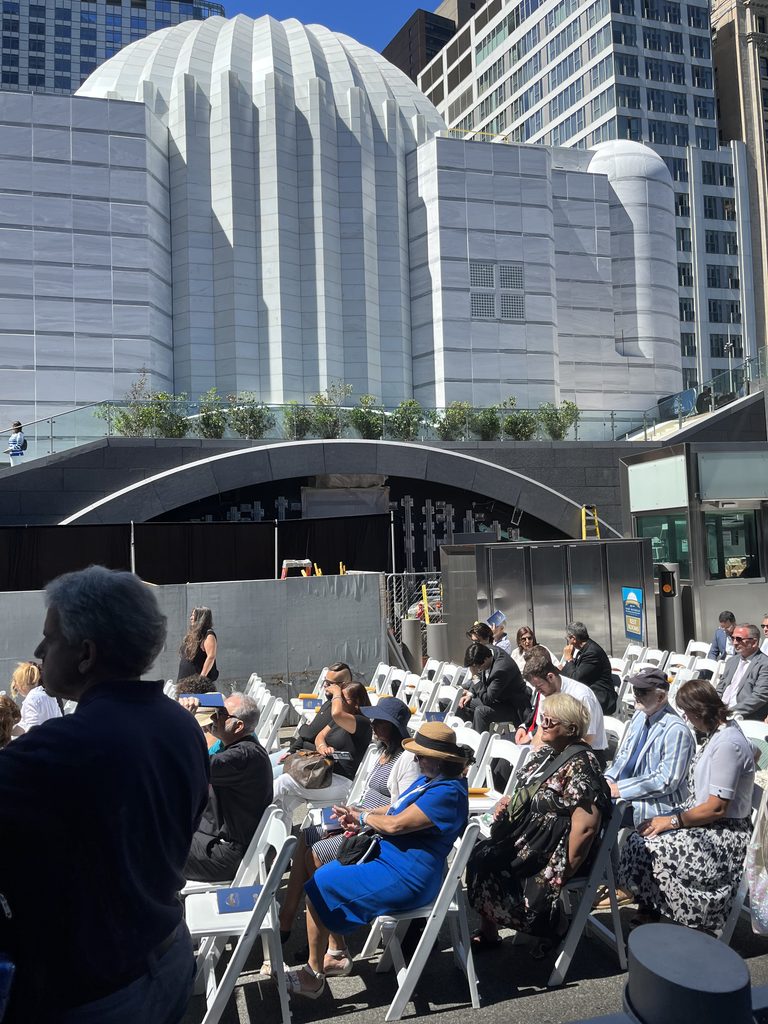
St. Nicholas Greek Orthodox Church and National Shrine. Photo credit: Catalin Cozma.
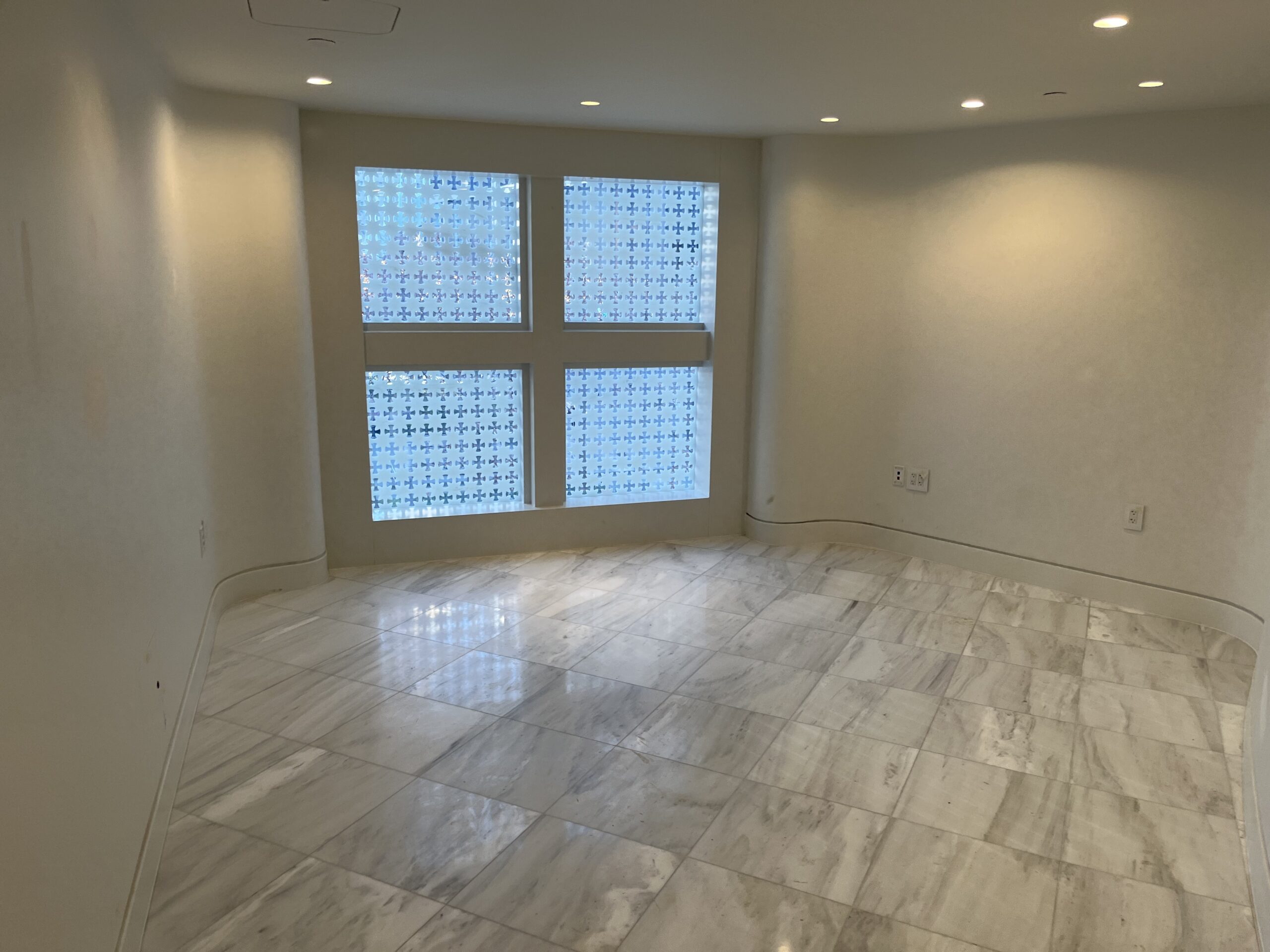
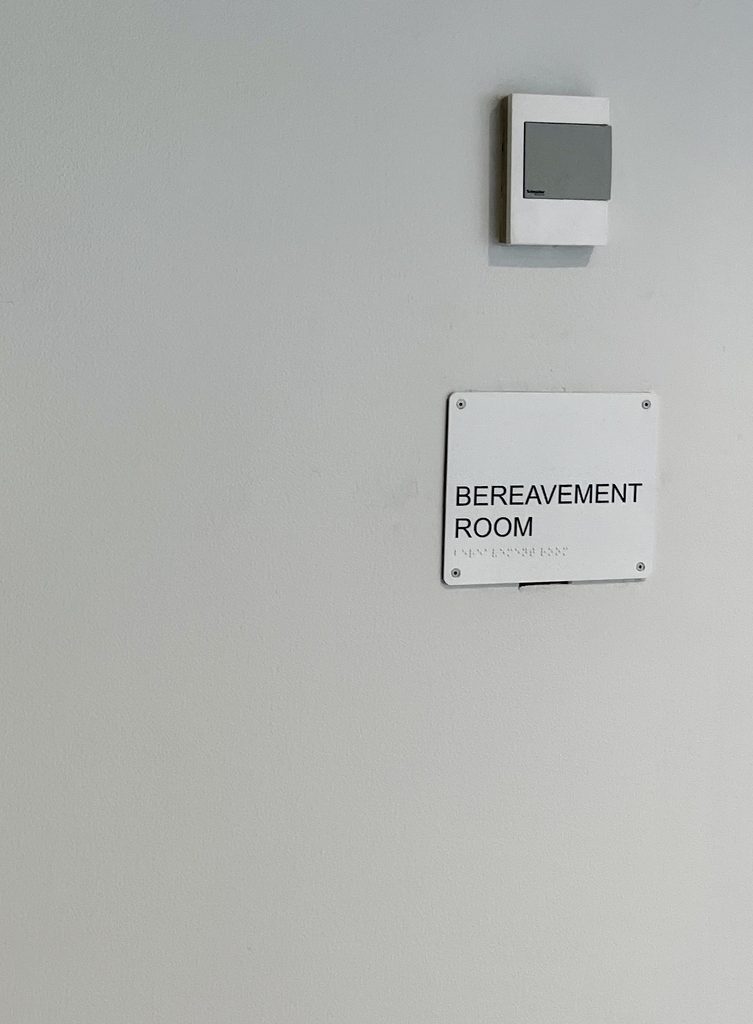
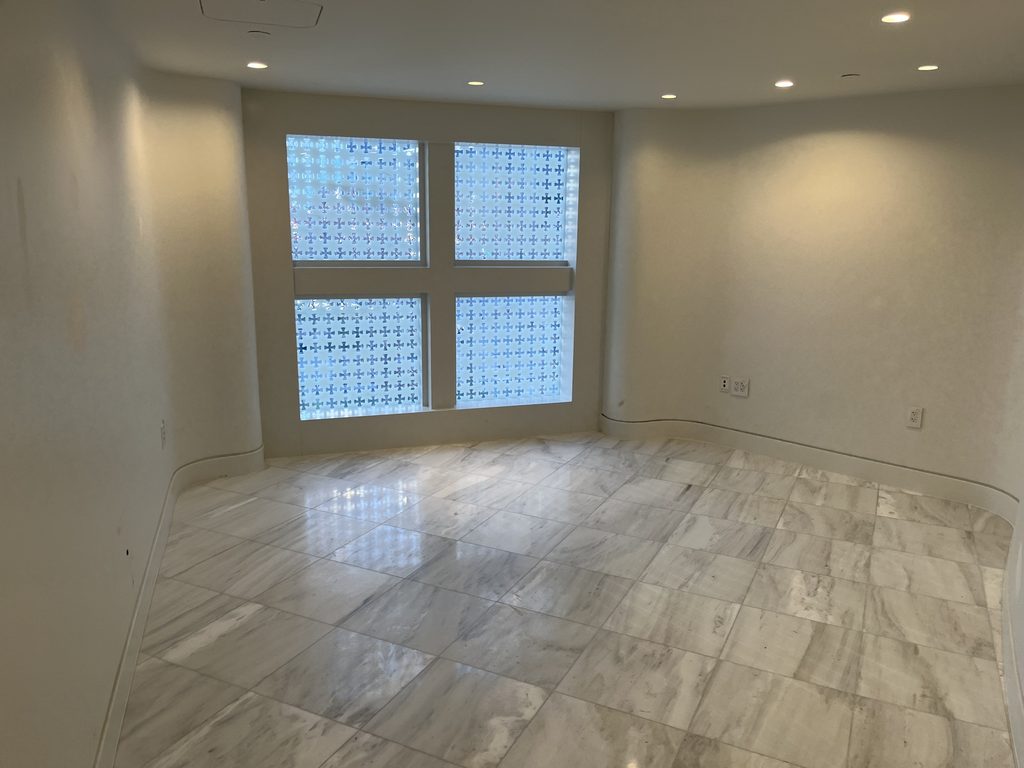
The aim was to understand how and with what strategies the reconstruction of an Orthodox Church was possible. The article demonstrates that one of the strategies used to get the reconstruction project agreed upon and eventually realized was the labeling of the new church as a “National Shrine” and the inclusion in the project of a multi-faith room for all religions. Although the church was consecrated on July 4, 2022, the destination of the multi-faith room is still shadowed because the Greek Orthodox Archbishop of New York has not yet decided on its final purpose.
The supposed multi-faith room at St. Nicholas Greek Orthodox Church and National Shrine. Photo credit: Catalin Cozma
The St. Dumitru Romanian Orthodox Church, since its foundation, has been conducting its religious and social activities in a secular building. This is an interesting case of “shared religious place” that inserts among secular places converted into religious places. Moreover, it is one of “shared religious places” in a synchronic way since, the religious and secular presence are combined, and activities in the same place are overlapped or intertwined, but also in terms of public and private spaces. This place of worship is quite invisible since the memory of the place is still supported by the preservation of the external facade of the building (i.e., a brownstone townhouse). However, other non-material traces, including sensory spheres such as sound (i.e., specific religious/Romanian Orthodox music) and smell (i.e., incense), as well as the presence of the lit candles beyond the main entrance (iron door) make this place recognizable as religious particularly on Sundays and religious feasts days. The perspective through which this place is analysed is that of the geo-history of religions and in particular the cultural geography research on the meaning of home.
The supposed multi-faith room at St. Nicholas Greek Orthodox Church and National Shrine. Photo credit: Catalin Cozma
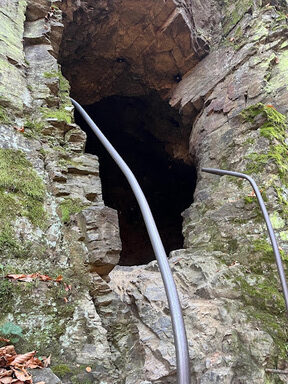
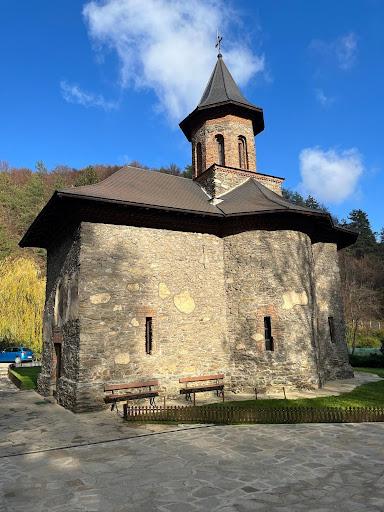
In November 2023, Ioan Cozma travelled to Romania to conduct fieldwork research at the Monastery of Prislop. The monastery is located on the territory of the village Silvașu de Sus, in the historical region of Hațeg (Țara Hațegului), at 10 km from Hațeg city and 30 km from Hunedoara city, in Transylvania, Romania. Its history goes back to the beginning of the 15th century (ca. 1399-1405); its foundation is attributed to the well-known Greek-Serbian monk Nicodemus, the founder also of the monastery of Tismana in south Romania. For many years the monastery was known as the Silivașu Monastery. It is still a popular pilgrimage destination, as it attracts thousands of visitors, mainly Christians (Orthodox, Roman-Catholic, Greek-Catholic, and Evangelical) from Romania and outside. The pilgrimage’s first reason is the miracle-working tomb of Arsenie Boca (1910-1989), one of the most important charismatic Orthodox monks of the 20th century Romania (Giușcă, 2020), also called the Saint of Transylvania (“Sfântul Ardealului”).
Monastery of Prislop. Photography by Ioan Cozma
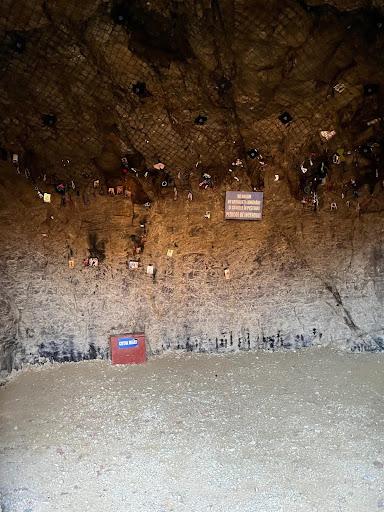
Secondly, the pilgrims are attracted due to the cave of Saint John the Eremite (known as St. John of Prislop), a 17th-century local monk who lived in a cave he dug himself in nearby (in the forest). Third, the presence of a miraculous water spring, already attested in the end of the 16th century for its miraculous healings, is also another point of interest for the pilgrims. Fourth, it is also a memory locus for the Romanian Greek Catholics (that recalls the time when the monastery belonged to Greek Catholics: between 1762-1948). Arsenie Boca was the monastery’s first superior and spiritual father after it was taken from Greek Catholics in 1948. Fearing the growing popularity of this spiritual figure, state authorities tried to put a hold on local religious activities: in 1959, Boca was deposed from priestly functions and deported to Bucharest, and the monastery was closed. However, in 1976, the monastery was reopened as a nunnery, yet we still know too little about the social and religious life at the monastery. How did locals react to the interference of Party members and the secret police? what counterstrategies followed the disbandment of the Greek-Catholic church and the transfer of the monastery to the Orthodox church?
Thus, the focus in this research will be on how these places inside of the monastery are visited and implicitly assumed by non-Orthodox.
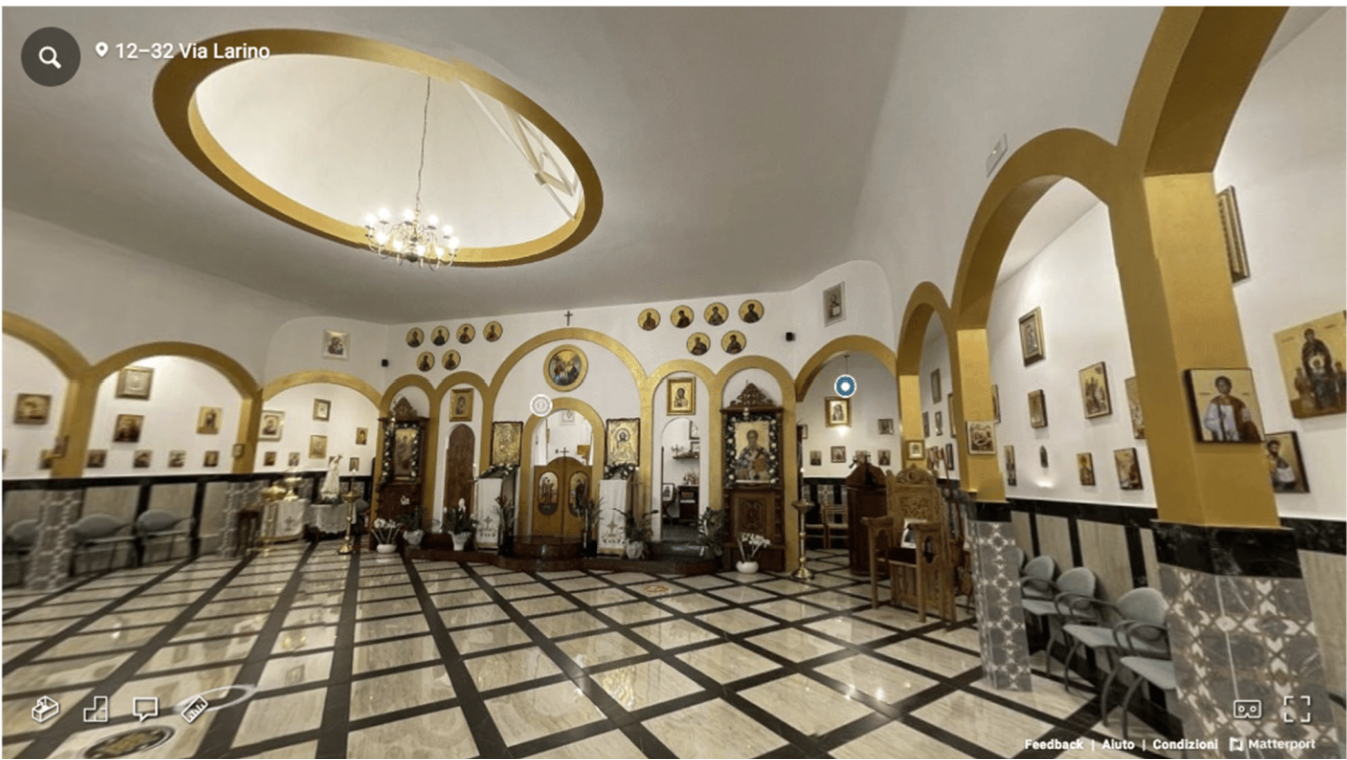
The purpose of this article is to study the Romanian Orthodox church of Lunghezza in Rome, mobilising the expression “shared religious place” referring to the shift from secular to religious and asserting that it is now a camouflaged religious place. Using the GIS mapping and Digital Humanities methods and tools, the paper analyses the geographical presence of Orthodox Romanians in the metropolitan City of Rome territory and the architectural typologies of their places of worship.
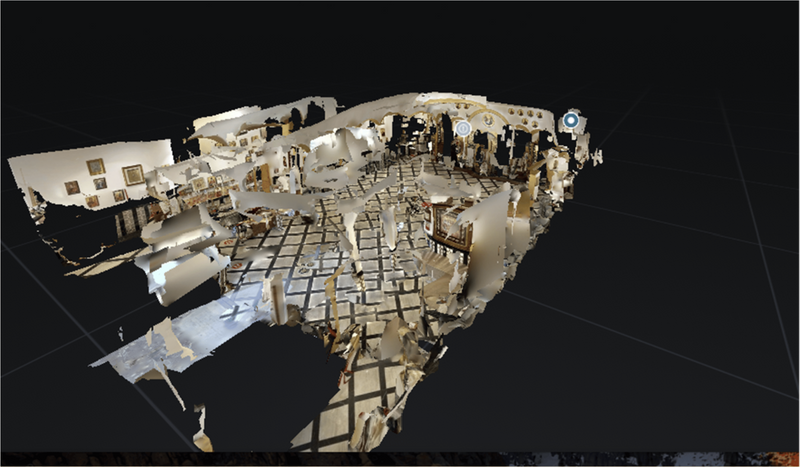
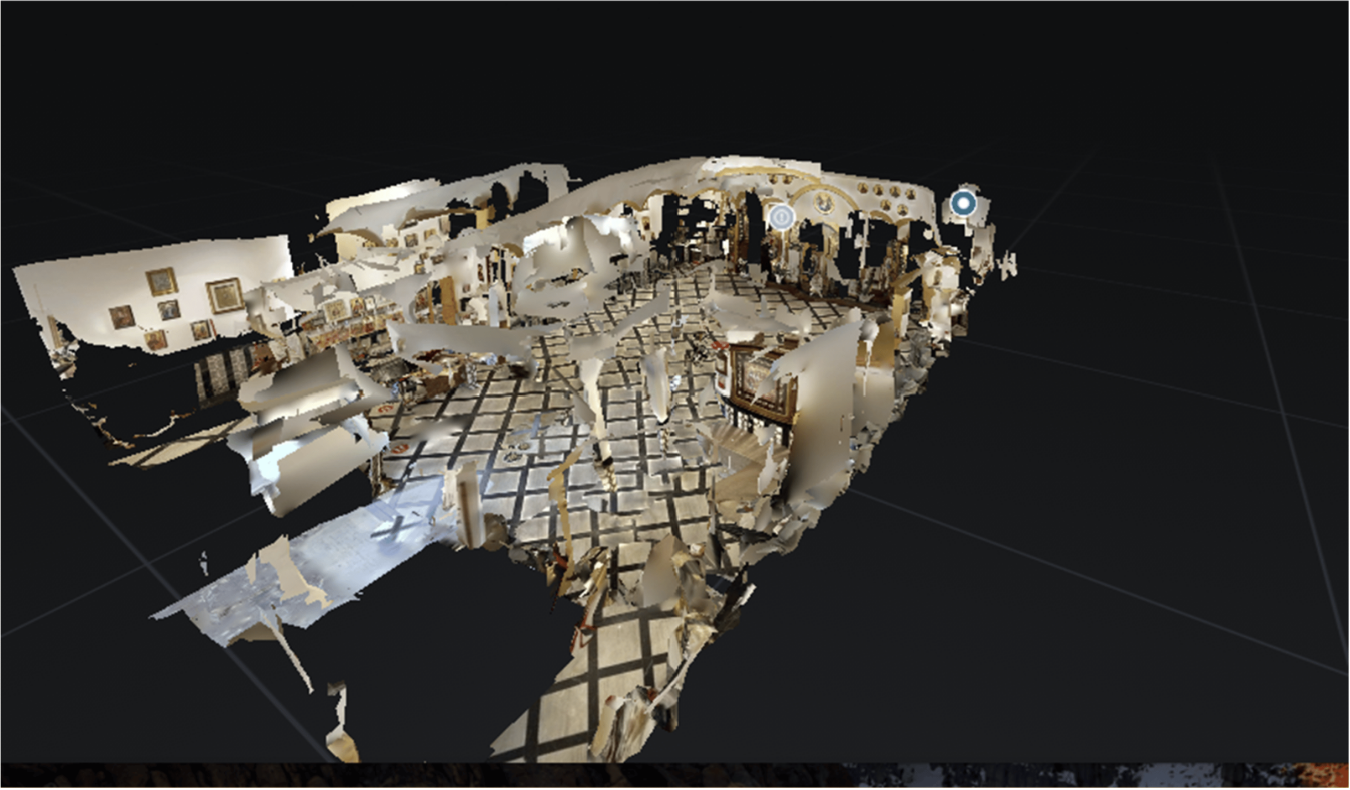
3D model of the church space looking towards the altar.
The history and geography of the place of worship in Lunghezza, a former stable converted into a house of worship, reveals the form of the resilience of the Romanian Orthodox parishes, forced to find various and compelling solutions in order to have a place for their worship activities.
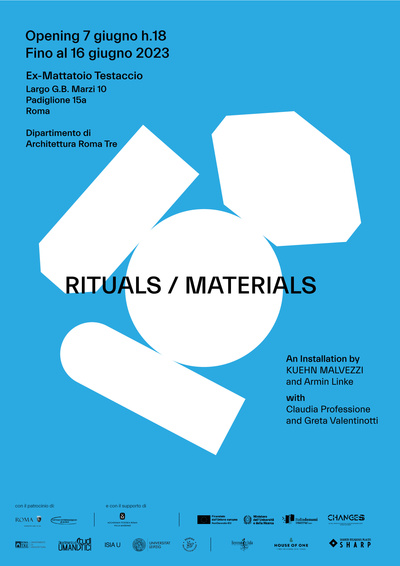
From June 7th to June 16th, 2023, the exhibition RITUALS / MATERIALS took place at the Ex-Mattatoio, Department of Architecture of the University of Roma Tre. This exhibition provides an opportunity to reflect on religious coexistence in the modern city through a site-specific installation created by the Berlin-based architecture studio KUEHN MALVEZZI and photographer Armin Linke, in collaboration with Claudia Professione and Greta Valentinotti. The installation is made possible thanks to the assistance of students from the University’s Department of Architecture.
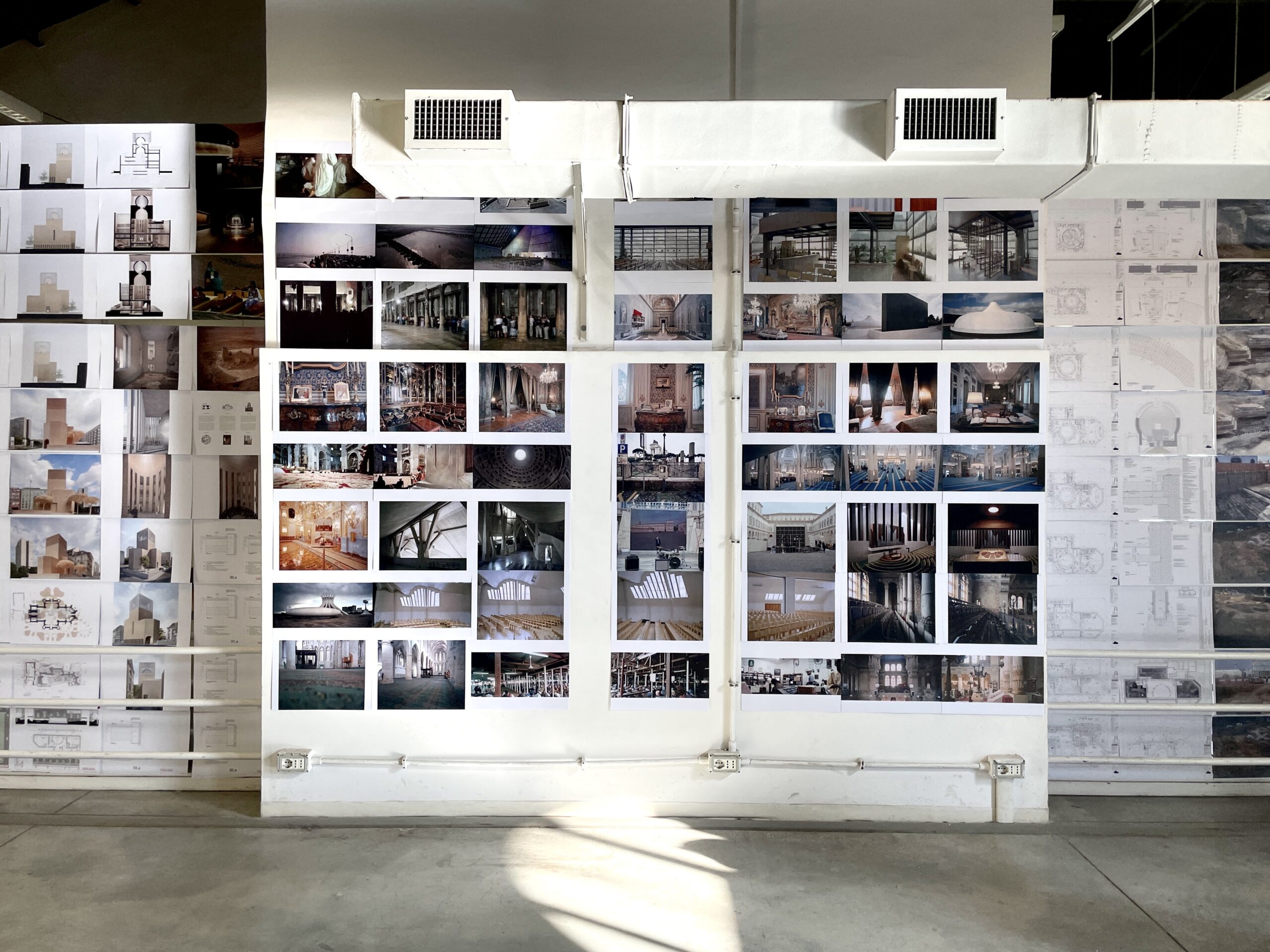
South wall elevation – Armin Linke
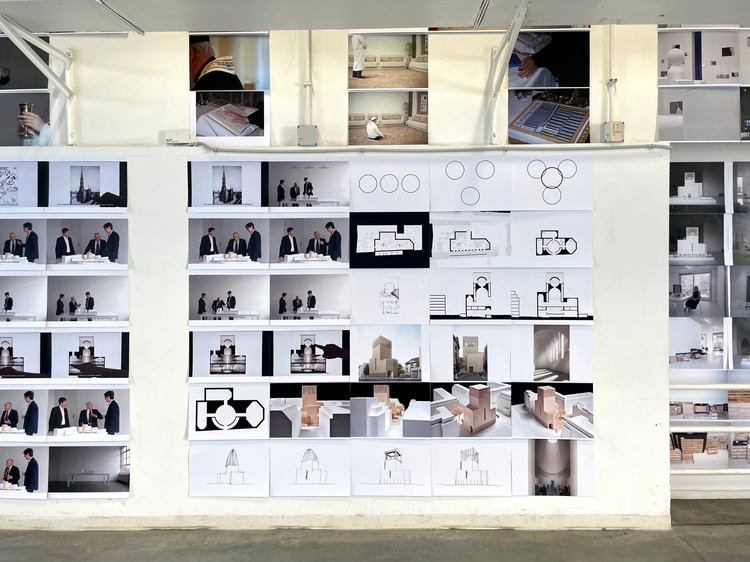
The installation consists of over 700 images that depict the House of One, a multi-faith building designed by KUEHN MALVEZZI currently under construction in Berlin. The images are arranged in a non-hierarchical and non-chronological manner, forming a narrative that visually conveys the development and design process of the building. Furthermore, it encourages a reconsideration of the methods of dialogue, integration, and coexistence among the three monotheistic communities residing in the city. Acting as the pieces of a cognitive mosaic, the images in RITUALS / MATERIALS describe a layered and intricate operational map, providing visitors with a sense of the complex journey involved in this extraordinary project, conveyed through various authorial voices. By employing abstraction, the images serve as a representation of Berlin as a paradigm for the contemporary city. This model acknowledges the impact of migratory movements and increasing globalization on the urban landscape, transforming it into a multifaceted and diverse organism.
North wall elevation – KUEHN MALVEZZI and Armin Linke
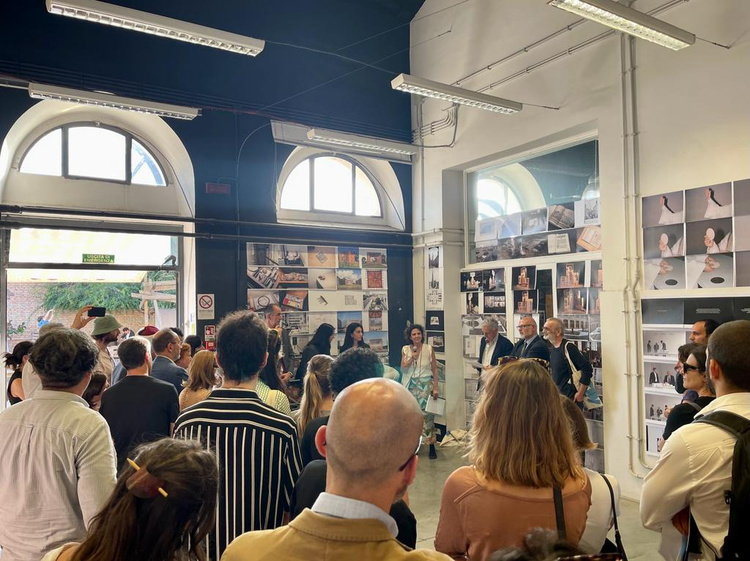
The initiative received excellent public participation from students, experts, architects, and religious leaders and generated significant media interest. Furthermore, it served as a starting point for a seminar on “shared religious spaces”, promoted by the École Française d’Athènes at the Department of Humanistic Studies of Roma Tre. The cultural initiative proved to be a success, stimulating debate and reflection on interre-ligious dialogue at various levels of engagement.
Presentation of the exhibition and institutional greetings
RITUALS/MATERIALS, curated by Eleonora D’Alessandro, was made possible through a collaboration between the Department of Architecture and the Department of Humanistic Studies at the University of Roma Tre, in conjunction with the ISIA of Urbino. The exhibition has received support from Villa Massimo and has been endorsed by the Department of Culture of the Municipality of Rome and the Interreligious Table of Rome.
Privacy Settings
Questo sito utilizza tecnologie come i cookie per memorizzare o accedere alle informazioni del dispositivo e integrare contenuti multimediali di terze parti. Il mancato consenso o la revoca dello stesso potrebbe limitare alcune funzionalità.
Funzionale
Sempre attivo
L'archiviazione tecnica o l'accesso sono strettamente necessari al fine legittimo di consentire l'uso di un servizio specifico esplicitamente richiesto dall'abbonato o dall'utente, o al solo scopo di effettuare la trasmissione di una comunicazione su una rete di comunicazione elettronica.
Preferenze
L'archiviazione tecnica o l'accesso sono necessari per lo scopo legittimo di memorizzare le preferenze che non sono richieste dall'abbonato o dall'utente.
Statistiche
L'archiviazione tecnica o l'accesso che viene utilizzato esclusivamente per scopi statistici.L'archiviazione tecnica o l'accesso che viene utilizzato esclusivamente per scopi statistici anonimi. Senza un mandato di comparizione, una conformità volontaria da parte del vostro Fornitore di Servizi Internet, o ulteriori registrazioni da parte di terzi, le informazioni memorizzate o recuperate per questo scopo da sole non possono di solito essere utilizzate per l'identificazione.
Marketing
L'archiviazione tecnica o l'accesso sono necessari per creare profili di utenti per inviare pubblicità, o per tracciare l'utente su un sito web o su diversi siti web per scopi di marketing simili.